
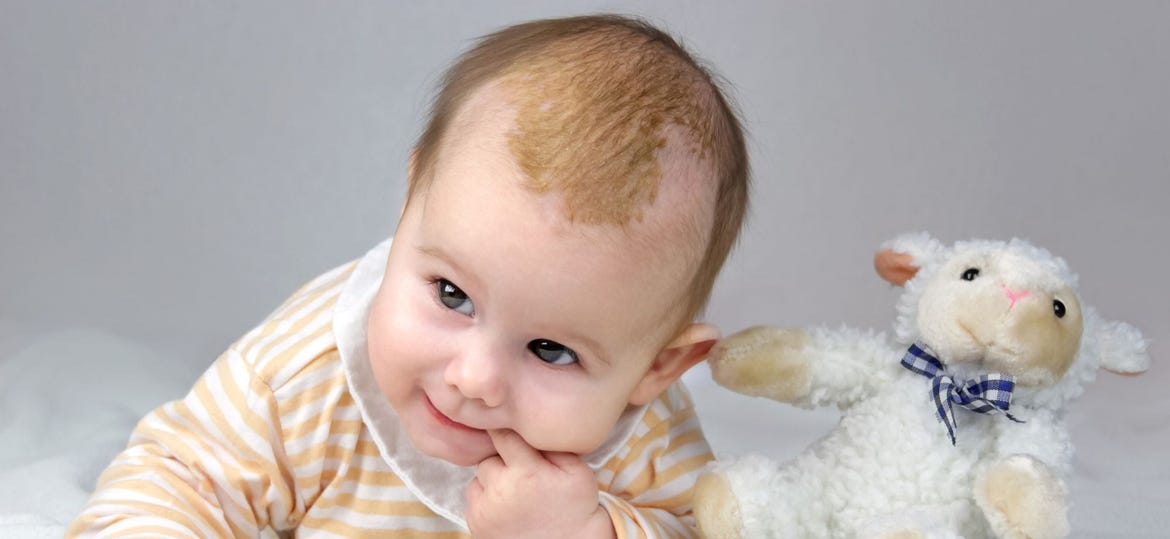
Atopic eczema or cradle cap - how to tell the difference
How to tell the difference and help your baby
Cradle cap and infantile seborrhoeic dermatitis are often confused, but there are important differences in their causes, symptoms and treatment. We're here to help you tell them apart. Find out why true cradle cap can cause intense itching, why harmless infantile seborrhoeic dermatitis usually doesn't bother your baby at all, and which simple home remedy can help gently remove those stubborn flakes.
💡 The most important facts about cradle cap and flaky baby scalps
Infantile seborrhoeic dermatitis (harmless): Often appears during the first few weeks of life and causes soft, greasy, yellowish flakes on the scalp.
The key difference is that it usually doesn't itch, so your baby remains perfectly comfortable.
True cradle cap (often itchy): Usually appears after the third month of life. The crusts tend to be harder, often with redness underneath, and can cause intense itching.
Affected babies may scratch their heads and sleep restlessly. Despite its name, cradle cap has nothing to do with a cow's milk allergy. The name comes from the crusts' resemblance to milk that has burnt onto the bottom of a pan.
❗️Never pick at the flakes with your fingernails, as this can damage the skin and increase the risk of infection. If you want to remove harmless flakes for cosmetic reasons, mild baby oil and an extra soft baby brush can help.
What is infantile seborrhoeic dermatitis and what causes it?
If your baby develops yellowish flakes on their scalp during the first few weeks or months but otherwise seems perfectly content, they may have infantile seborrhoeic dermatitis.
This condition is associated with increased activity of the sebaceous glands on the scalp, which may be influenced by maternal hormones. The glands produce excess sebum, which combines with dead skin cells to form soft, greasy flakes.
Good to know: Infantile seborrhoeic dermatitis is usually a harmless, cosmetic concern. It generally doesn't itch or cause discomfort, and it often clears up on its own during the first year of life, although it can sometimes persist into toddlerhood.
How to recognise true cradle cap
True cradle cap, which can be associated with atopic eczema, is less common and can be considerably more uncomfortable for your baby. It typically first appears between 3 and 6 months of age.
Unlike the soft, greasy flakes of infantile seborrhoeic dermatitis, true cradle cap tends to form harder, crusty patches on a reddened scalp that may sometimes weep. The most noticeable symptom is often intense itching. Affected babies may become restless, cry frequently, rub their heads against the mattress or try to scratch their scalps with their hands. As true cradle cap can be an early sign of atopic dermatitis and may spread to the cheeks or the inner sides of the arms, it's important to consult a paediatrician.
🛍️ Gentle care for delicate baby scalps
Whether your baby has harmless flaky skin or a sensitive scalp, choosing gentle care products is important. In our shop, you'll find products suitable for your baby's daily care routine:
- Explore our range of high quality, fragrance free baby oils, such as pure almond oil, and gentle baby shampoos that won't sting the eyes.
- Our baby brushes and sponges are ideal for gently removing loose flakes from your baby's fine hair.
How to remove harmless scalp flakes gently and safely
As infantile seborrhoeic dermatitis usually doesn't cause any discomfort, treatment is often unnecessary. However, if you would prefer to remove the yellowish flakes or notice a slightly unpleasant smell, you can try this gentle care routine.
- Apply oil: In the evening, gently massage a few drops of pure, unscented baby oil, or good quality almond or olive oil, into the affected areas of your baby's scalp.
- Allow the oil to work: Leave the oil on for 2 to 3 hours to help soften the greasy flakes. Avoid leaving loose cloths or other items in your baby's sleeping area.
- Brush gently: Once the flakes have softened, use a very soft baby brush to gently loosen them. You can also brush lightly against the direction of hair growth. The loosened flakes should come away easily with the bristles.
- Wash the hair: Finally, rinse your baby's hair with clean water or use a small amount of mild baby shampoo to remove any remaining oil.
Can you simply scrape the flakes off?
No, you should never do this. Although it can be tempting, avoid scraping dry flakes or crusts from your baby's scalp with your fingernails, whether they have infantile seborrhoeic dermatitis or true cradle cap.
The skin beneath the crusts is particularly delicate. Forcibly removing them can cause tiny cuts and bleeding, creating an opportunity for bacteria and fungi to enter the skin and potentially cause a painful infection. Only attempt to remove harmless flakes once they have softened, and never force them off.
Frequently asked questions about flaky baby scalps
Can infantile seborrhoeic dermatitis cause hair loss?
A few fine baby hairs may come away when you gently brush out softened flakes, particularly if they were already loose and caught in the crusts. However, infantile seborrhoeic dermatitis generally doesn't damage the hair follicles, and the hair usually grows back normally.
Should I take my baby to a paediatrician?
If your baby isn't scratching, the flakes are soft and yellowish, and the skin underneath isn't severely red or bleeding, infantile seborrhoeic dermatitis may be the cause. This usually doesn't require medical treatment. However, if you're unsure whether your baby has true cradle cap, the scalp is very itchy or the affected areas are spreading to the face, it's best to consult a paediatrician.
Should I wash my baby's hair every day if they have a flaky scalp?
Daily shampooing is usually unnecessary. Washing too frequently can strip natural oils from your baby's delicate scalp and cause dryness or irritation. Gently cleaning their scalp with water once or twice a week during their usual bath is generally sufficient.
Related products
-
Memì - Natural Baby Care Baby Oil, 150 ml
- For sensitive baby skin
- Also suitable for cradle cap
- Nourishing & protective
-
Beauty Baby Goat Hair Baby Brush
- From birth
- With fine goat hair
- Beechwood handle
-

-

FutuNatura 100% Almond Oil with Pump, 300 ml
- For face, hair and body
- Also ideal for massages
- With a practical dispenser
Magazine Articles:
-
Austria: Free standard delivery from € 54,90
-
Free
returns -
24-hour shipping
Secure payments
with SSL encryption technology